
why my diaphragm pump airless paint sprayer doesn’t suck the paint ?
If a diaphragm airless paint sprayer runs but will not draw paint, check the prime setting, material supply and suction-side sealing before suspecting pump damage. After transport or storage, the hydraulic oil level and a sticking inlet valve may also need attention.
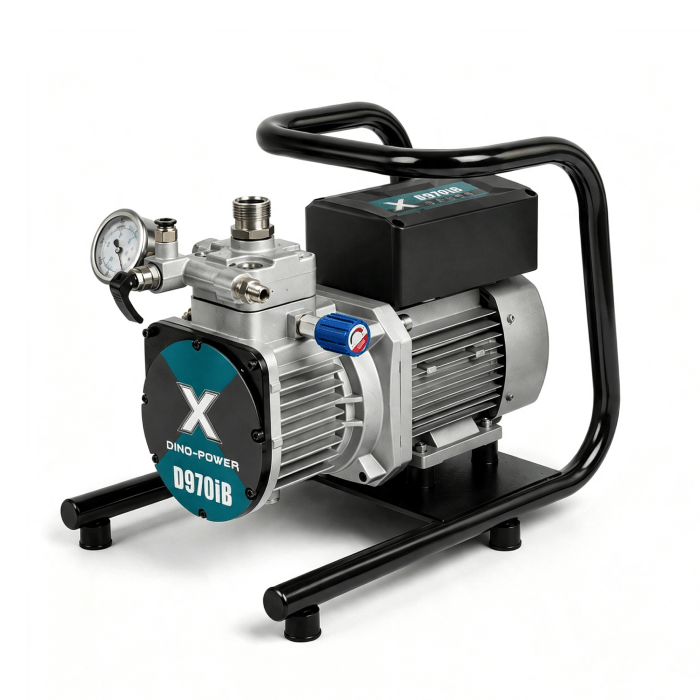
Start with safe, external checks
Use the pressure-relief procedure for your machine, switch off and disconnect power before removing filters or fittings. Never put fingers or tools into an inlet while the machine is running. A hose or gun may retain pressure after the motor stops.
- Confirm the prime position. Set the prime/spray valve and pressure control as directed in the model’s startup instructions. Use a suitable collection container for the return flow.
- Check the supply. Fully immerse the suction inlet in the approved material. Confirm the coating is within the sprayer’s viscosity and tip requirements.
- Inspect the inlet strainer. Dried paint and debris restrict flow. Clean using the specified compatible cleaner; do not remove filtration permanently to hide a blockage.
- Check the suction hose and seals. A loose union, damaged gasket or split hose can admit air without showing an obvious outward paint leak. Replace damaged parts and tighten as specified.
Check hydraulic oil after shipping or storage
Some diaphragm sprayers may be supplied with oil drained for air shipment transport. but all our DP diaphragm pump sprayers by sea shipping is filled with the oil already. Confirm the shipping preparation and check the oil by the correct model-specific method before running. Contact DP for any question you have, Do not assume every shipment is drained or add a fixed quantity without checking the actual level.
The hydraulic circuit drives the diaphragm; it is separate from the paint circuit. Use only the specified oil grade and fill level. The original troubleshooting example mentioned approximately 0.8 litre and ISO VG 46 anti-wear oil, but those figures are not instructions for all models. See the diaphragm pump oil-capacity guide for the model references and their limits.
What if the inlet valve sticks?
Dried paint can prevent the inlet valve from moving or sealing. Only use the approved valve-release or cleaning procedure after isolation and pressure relief. Do not probe an operating valve, hammer the housing or use sharp tools that could damage its seat. if you find the suction valve get blocked, you need to take off the valve and clean it thoroughly with a brush. Be careful with the edge of the valve seat and the ball. Normally they are made of hardened Tungsten Carbide, just a small piece dried paint could cause the leaking or low pressure of the spraying.
Air in the hydraulic circuit can also affect operation. Bleeding procedures depend on the pump design; use the service instructions rather than running the pump dry for an arbitrary time. A loose pressure-control knob needs inspection, not forced turning or an improvised pressure adjustment. When a new sprayer has no suction or very less pressure, you need to power on the machine, and unscrew a little the PRESSURE REGULATOR valve till you see some oil comes out. that means the air is exhausted, and you can tighten the PRESSURE REGULATOR valve , and the problem should be solved.
Use the result to narrow the fault
If compatible cleaning fluid primes but paint does not, investigate material condition and supply restrictions. If neither primes, recheck suction sealing and valves. Persistent failure, oil contamination or leakage calls for a service inspection of the diaphragm and hydraulic system.
Review the DINO-POWER diaphragm-pump sprayer range when identifying your equipment. Record the model, oil level, return-flow behaviour and whether the problem began after storage before requesting parts.

Sent information