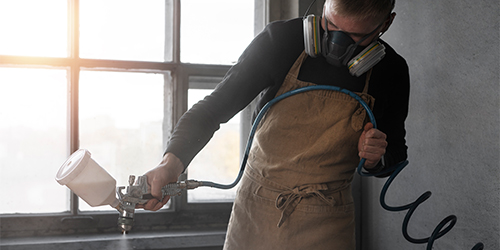
Here’s a simple comparison of their core differences:

Choose Airless for speed and power on big, rugged jobs.
Choose Air Spray for a flawless finish on smaller, detailed work where quality is the top priority.
Feature Airless Spray Gun Air Spray Gun (Conventional)
How it Works Uses a high-pressure pump to force paint through a tiny tip, which atomizes it. Uses compressed air (from a compressor) to shatter the paint stream into particles at the nozzle.
Pressure Source High fluid pressure (2000-3000+ PSI). Compressed air (low pressure, high volume).
Speed Very fast. Ideal for large areas like walls, fences, and exteriors. Slower. Better for smaller, detailed projects.
Finish Quality Good, efficient coat. Can have a slightly “textured” orange peel effect. Superior smooth finish. Used for high-gloss automotive, furniture, and fine finishes.
Overspray Moderate to high. Less efficient transfer, more bounce-back. Very high. A lot of paint gets atomized into the air, requiring more containment.
Paint Viscosity Handles thick materials (latex, elastomerics, stains) directly. Requires thinned-down materials to be properly atomized by the air.
Main Use Productivity. Large-scale painting, construction, protective coatings. Precision & Quality. Auto refinishing, cabinets, metalwork, fine woodworking.

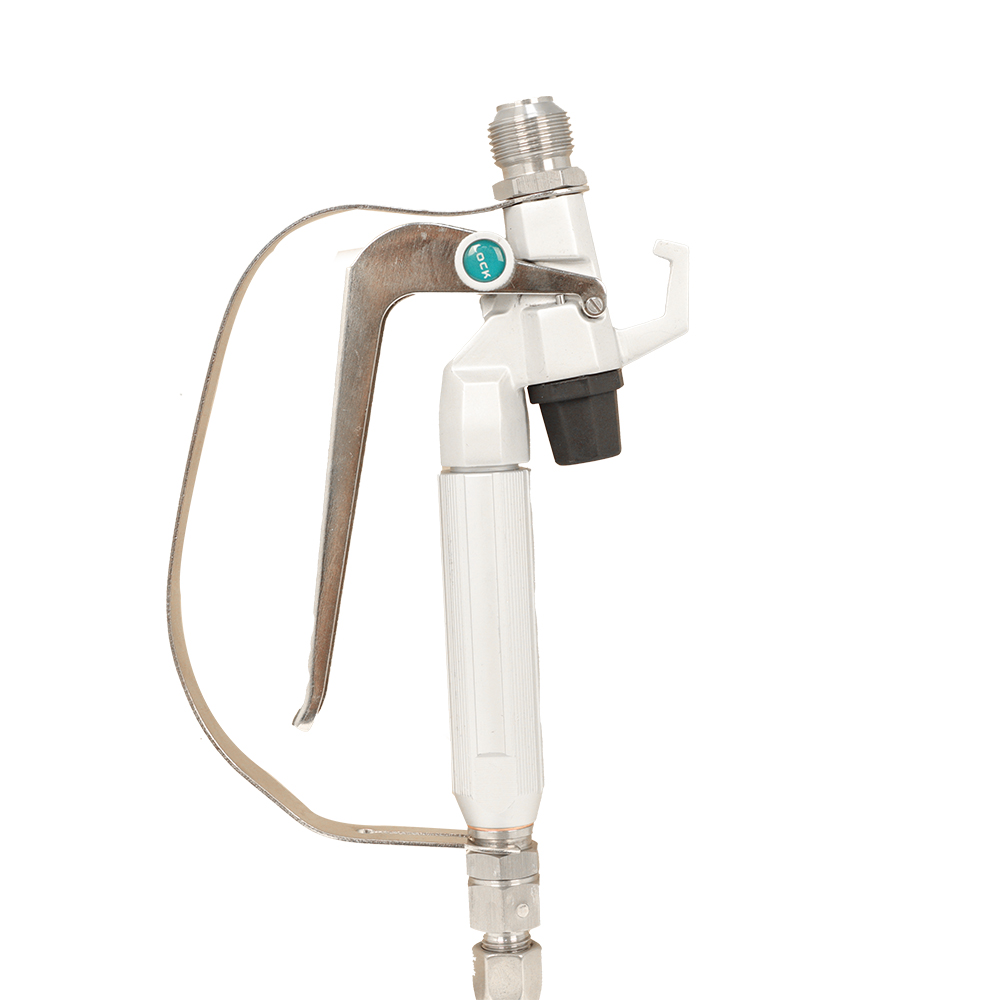
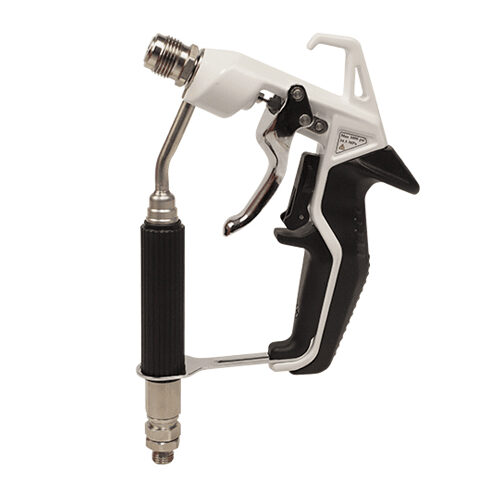
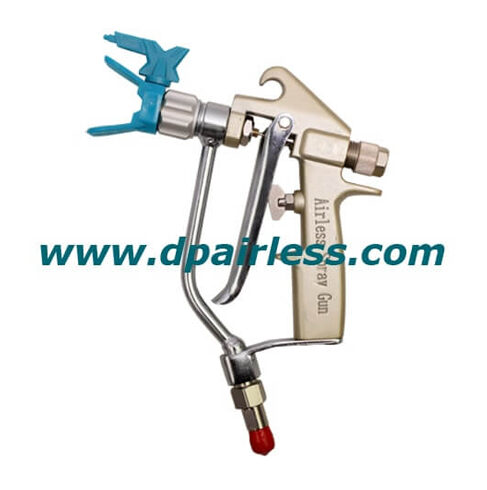
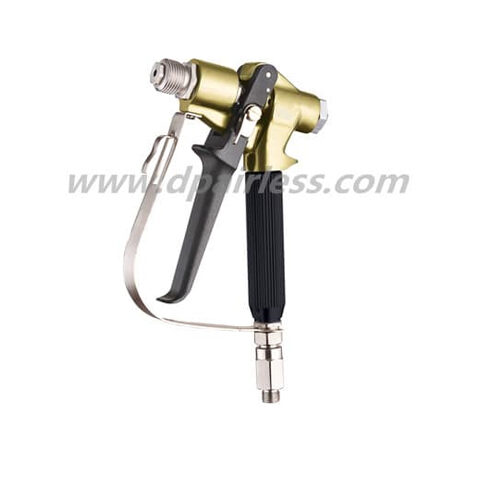
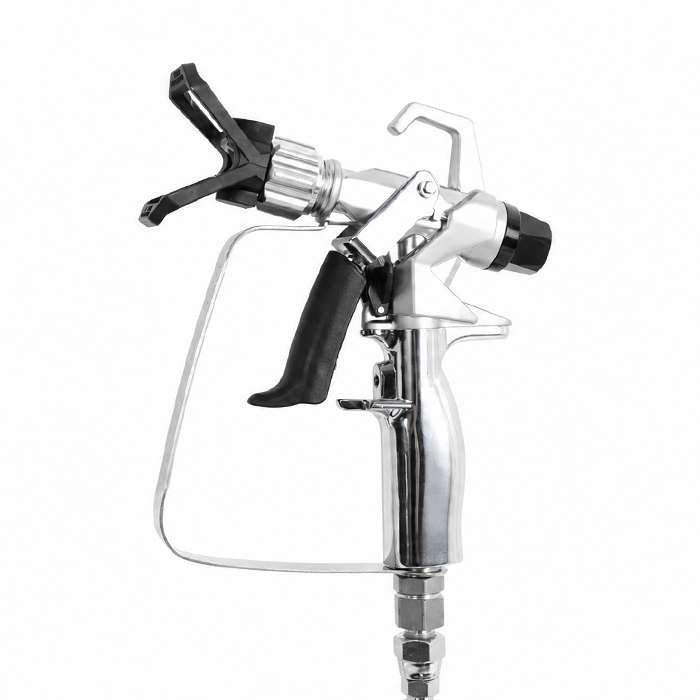
Selecting the right airless spray gun focuses on compatibility, control, and durability. Here’s what to consider:

1. Compatibility with Your Pump

  • Connection Type: Ensure the gun’s hose connection (e.g., M15, M22 thread) matches your sprayer’s hose.

  • Pressure Rating: The gun must be rated for your pump’s maximum pressure (e.g., 3300 PSI, 4500 PSI).

2. Tip Connection & Selection

  • Quick-Connect vs. Threaded: A quick-connect system allows fast tip changes without tools. Standard for most professional work.

  • Tip Compatibility: Choose a gun compatible with standard RAC/X or DuroSpray style tips, giving you a wide range of sizes for different materials and fan widths.

3. Trigger & Control

  • Material: A metal trigger is more durable than plastic.

  • Comfort: A well-balanced gun with a contoured handle reduces fatigue.

  • Safety: A trigger guard and lock prevent accidental spraying.

4. Durability & Material

  • Fluid Path: Look for hardened stainless steel or tungsten carbide internals for longer life, especially with abrasive materials.

  • Body: A robust, metal-body gun is preferred for daily professional use over lightweight plastic models.

5. Special Features (For Specific Needs)

  • Reverse-A-Clean Tip: Allows you to clear a clog by simply rotating the tip, saving time and paint.

  • Extension Poles: For high walls or ceilings, choose a gun compatible with a threaded extension pole.

Quick Decision Guide:

  • For Pros/Heavy Use: Choose a metal-body, quick-connect gun with a reverse tip and a comfortable grip.

  • For DIY/Occasional Use: A quality, contractor-grade gun with a good trigger and standard tip connection is sufficient.

  • Always Match the Tip: The gun is just the holder. Your finish quality depends on selecting the correct tip size (e.g., 0.015″ for stains, 0.021″ for thick latex) for your material.
1. Working Principle

  • Airless: Uses only a very high-pressure pump (2000-4500 PSI) to force material through a tiny tip orifice. The tip alone creates the fan pattern via atomization.

  • Airmix (Air-Assisted Airless): A hybrid system. It uses a high-pressure pump (lower pressure than pure airless, typically 500-1500 PSI) for primary atomization, then adds a low-pressure air stream (5-30 PSI) from an air compressor around the fan to further soften and shape it.

2. Key Comparison

Feature Airless Sprayer Airmix (Air-Assisted Airless) Sprayer
Atomization Pure hydraulic pressure. Pressure + assisted air.
Finish Quality Good, functional coat. Can have more “orange peel.” Superior, smoother finish. Less texture, finer atomization.
Overspray & Bounce-back Higher. More material is lost to the air and surroundings. Significantly Lower. The air curtain contains the fan, improving transfer efficiency.
Speed Extremely Fast. Highest material delivery rate. Fast, but slightly slower than pure airless due to the focused fan. Still much faster than HVLP.
Material Usage Higher consumption due to more overspray. More Economical. Higher transfer efficiency (more paint lands on the surface).
Best For Large, non-detailed surfaces: Exterior siding, fences, decks, roofs, large walls, protective coatings. Projects requiring both speed and a fine finish: Cabinets, doors, trim, furniture, commercial interiors, industrial finishes where appearance matters.

3. How to Choose?

  • Choose Pure Airless if: Your top priority is maximum speed and power for big areas, and the finished texture is not critical (e.g., textured stucco, primer coats, rough siding). It’s the workhorse for volume.

  • Choose Airmix if: You need a high-quality, smooth finish but still have a large area to cover. It bridges the gap between the quality of an HVLP/conventional spray gun and the speed of an airless system. Ideal for fine woodworking, architectural metal, or any production work where reducing sanding and achieving a finer finish is valuable.

DP AIRLESS PAINT SPRAYER

DP AIRLESS PAINT SPRAYER