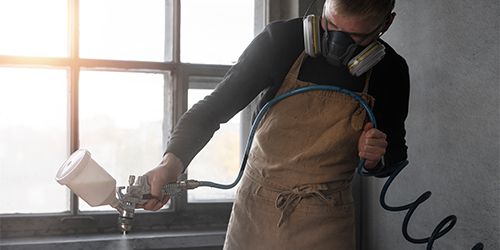
Waterproof coating is a specialized liquid-applied material that cures to form a continuous, impermeable barrier on surfaces, preventing the passage of water and moisture. Its core function is protection, not decoration.
Key Characteristics:
-
Forms a Flexible Membrane: Unlike simple water-resistant paints, it creates a seamless, elastic film that can bridge small cracks and withstand structural movement.
-
Adhesion & Durability: Bonds tightly to substrates (concrete, wood, masonry, metal) and resists weathering, UV rays (for exterior grades), and chemical exposure.
-
Vapor Permeability (Breathability): High-quality coatings for walls and some structures allow water vapor inside the substrate to escape while blocking liquid water from outside, preventing blistering and trapped moisture.
-
Acrylic (Elastomeric): Flexible, water-based, user-friendly. Used on exterior walls, stucco, and above-grade masonry.
-
Polyurethane: Extremely durable, abrasion-resistant, and flexible. Ideal for decks, roofs, and high-traffic areas.
-
Cementitious: A rigid, cement-based coating for internal wet areas (e.g., basements, swimming pools).
-
Bituminous (Asphalt-based): Used primarily for foundational and below-grade waterproofing, like foundations.
-
Epoxy: Forms a hard, rigid shield. Used on interior concrete floors to resist water and chemicals.
-
Exterior: Building walls, roofs, balconies, terraces.
-
Interior: Bathrooms, kitchens, laundry rooms, basements.
-
Specialized: Foundations, water tanks, swimming pools, bridges.


A “Waterproof Paint Spray Machine” isn’t a distinct category of equipment. Instead, it refers to any robust airless or plural-component sprayer specifically capable of applying thick, viscous waterproofing and elastomeric coatings.
These sprayers are built to handle the unique challenges of materials like:
-
Elastomeric Roof Coatings
-
Liquid-Applied Membranes
-
Thick Polyurethane & Acrylic Sealants
-
Cementitious Waterproofing Slurries
-
Two-Component Waterproof Epoxies
-
High Pressure & Flow: Waterproof coatings are typically very thick. The sprayer needs high pressure (typically 3000+ PSI) to properly atomize the material and a sufficient flow rate (GPM) to maintain productivity.
-
Heavy-Duty Pump & Hoses: Equipped with a industrial-grade piston pump (e.g., with ceramic pistons) and reinforced, non-abrasive hoses to withstand the viscosity and any abrasive particles in certain coatings.
-
Material Compatibility: The pump’s fluid path (packings, seals, valves) must be compatible with the chemical makeup of the coating (e.g., solvent-based or water-based).
-
Option for Plural-Component Models: For two-part reactive waterproofing materials (like some epoxies and polyurethanes), a specialized plural-component sprayer is required to precisely meter, mix, and apply the parts right at the gun.
-
Applying elastomeric coatings on roofs and walls.
-
Waterproofing foundations, balconies, and parking decks.
-
Coating water tanks, ponds, and secondary containment areas.
A “Waterproof Paint Spray Machine” is a heavy-duty, high-output airless or plural-component sprayer selected for its power, durability, and compatibility to efficiently apply demanding, paste-like waterproofing sealants and membranes over large surface areas.
Selecting the right sprayer for waterproofing/elastomeric coatings requires matching the machine’s power, pressure, and flow to your specific material and project scale. Here’s a simple guide focused on your requested specs:
1. Pressure (PSI – Pounds per Square Inch)
-
Why it matters: Pressure atomizes the material. Thicker coatings require higher pressure.
-
What you need:
-
For heavy-duty sealants & elastomerics (roof coatings, thick membranes): Minimum 3,000 PSI. Standard range is 3,300 – 4,500 PSI.
-
For thinner acrylic waterproofing paints: 2,500 – 3,300 PSI may suffice.
-
-
Rule: Choose high pressure (3,000+ PSI) to handle viscous materials and ensure proper fan pattern and penetration.
2. Flow Rate (GPM – Gallons per Minute)
-
Why it matters: Flow determines how fast you can apply the coating, especially crucial for large areas like roofs or decks.
-
What you need:
-
For professional, large-scale work: 0.6 – 1.2+ GPM. Higher flow allows faster application with wider tips.
-
For smaller projects (e.g., basement walls): A unit with 0.3 – 0.6 GPM can work but will be slower.
-
-
Rule: Prioritize higher GPM for productivity on big jobs. A 1.0 GPM sprayer will be twice as fast as a 0.5 GPM sprayer using the same tip size.
3. Motor Power (HP – Horsepower / kW – Kilowatts)
-
Why it matters: Motor power drives the pump to achieve the rated pressure and flow. It’s the engine of the system.
-
What you need (Electric Models):
-
For heavy-duty professional sprayers: 1.5 HP – 2.5+ HP (1.1 – 1.9+ kW). This power range supports the 3,000+ PSI and high GPM requirements.
-
For mid-range/contractor models: 1.0 – 1.5 HP (0.75 – 1.1 kW).
-
-
Note: Gas/Diesel engines are rated in CC (cubic centimeters) or HP. For large remote jobs, a 5-11 HP gas engine is common.
| Your Project & Material Profile | Recommended Minimum Specs |
|---|---|
| Heavy Elastomerics / Roof Coatings (Large commercial roof, thick membranes) |
Pressure: 3,300 – 4,500 PSI Flow: 0.8 – 1.2+ GPM Motor: 1.8 – 2.5+ HP Electric / 7+ HP Gas |
| General Waterproofing / Sealants (Residential roofs, foundations, decks) |
Pressure: 3,000 – 3,300 PSI Flow: 0.6 – 0.9 GPM Motor: 1.5 – 2.0 HP Electric / 5-7 HP Gas |
| Acrylic Waterproof Paints (Wall coatings, smaller areas) |
Pressure: 2,500 – 3,000 PSI Flow: 0.4 – 0.6 GPM Motor: 1.0 – 1.5 HP Electric |
Other Critical Factors:
-
Pump & Hoses: Ensure the pump is designed for heavy materials (e.g., with ceramic pistons) and use non-abrasive, high-pressure hoses.
-
Tip Selection: Use wider, heavy-build tips (e.g., 0.021″ – 0.031″) designed for elastomerics.
-
Drum Pump Option: For projects using 55-gallon drums, a reversible drum pump accessory is highly efficient.
Follow the coating supplier’s requirements for substrate condition, primer, detail reinforcement, coat thickness and recoating interval. Apply a trial area and measure wet-film thickness where the formulation and specification permit. DINO-POWER DP-N880 lists 10 L/min maximum flow and a 1.5 mm maximum grain size, but pump output alone cannot ensure a watertight membrane. Corners, penetrations and joints need their specified detailing. Allow the prescribed cure and complete the required inspection or water test before covering or placing the system into service.