
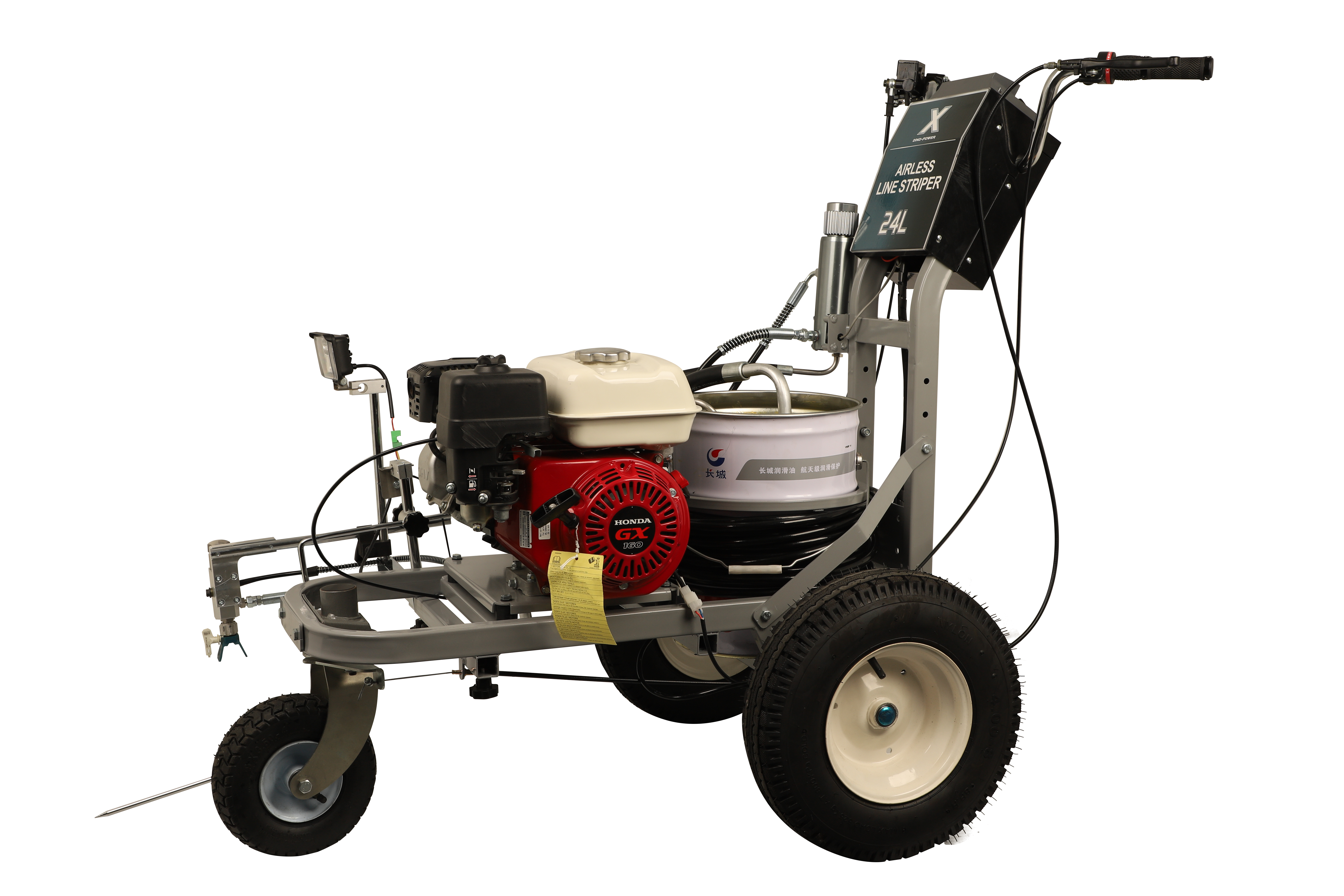


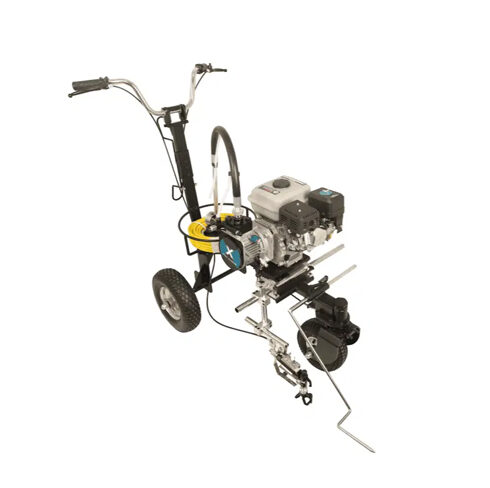
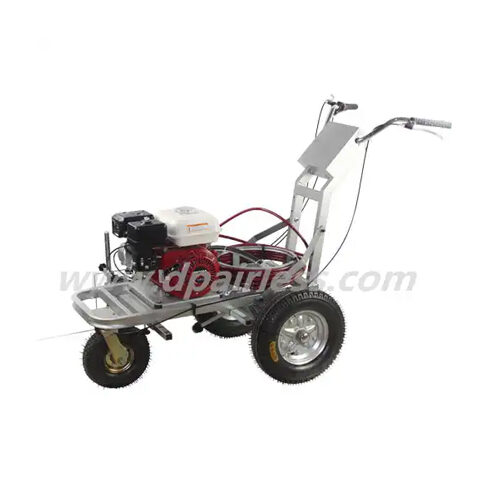

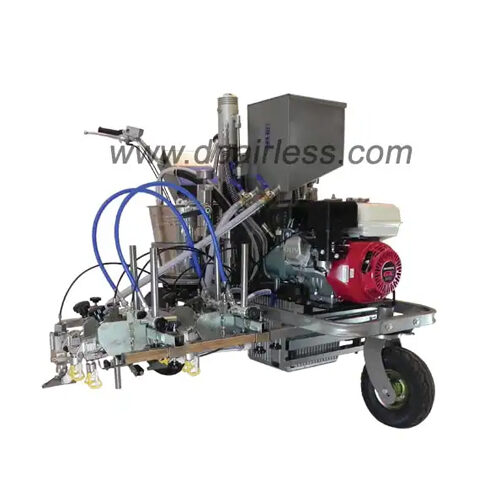
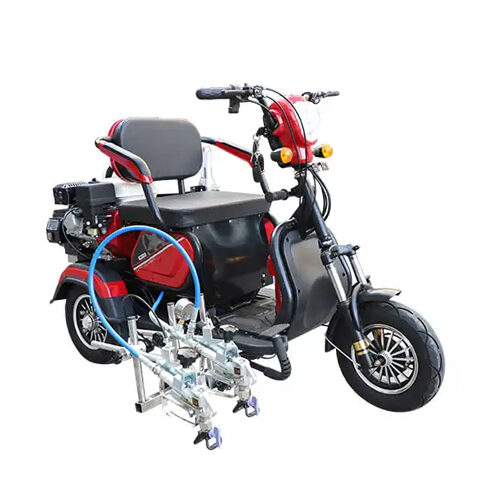

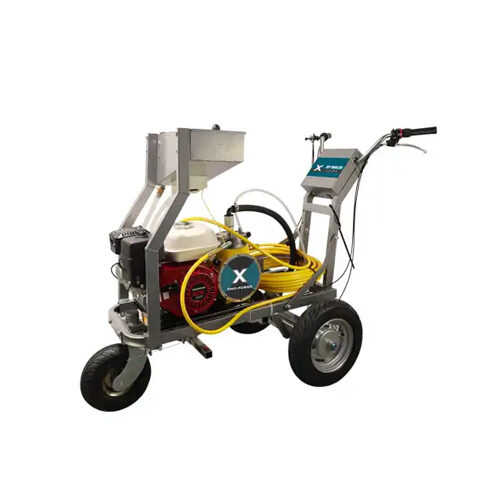


Selecting the right airless line striper depends on your project scale, paint type, and required efficiency. Focus on these key factors:
-
Paint Type & Heating: The most critical choice. Are you spraying water-based latex (cold) or thermoplastic/alkyd (requires heating)? For thermoplastics, you must choose a hot-airless striper with a melting kettle (direct-fired or oil-jacketed) and heated hoses.
-
Performance (GPM & PSI): Match pump specs to your needs.
-
Flow Rate (GPM): High GPM (0.5-2+ GPM) allows for wider stripes and faster travel speeds. Crucial for parking lots and highways.
-
Pressure (PSI): High pressure (2000-4000 PSI) ensures proper atomization of thick, hot materials.
-
-
Drive System:
-
Walk-Behind: Ideal for small to medium jobs (parking spots, short walkways, sports courts). Look for easy maneuverability.
-
Truck/Trailer-Mounted: Essential for high-volume, long-line highway or large parking lot work. Maximizes productivity.
-
-
Line Width & Control: Choose a gun and tip system that offers your required widths (2″, 4″, 6″, 12″ etc.). Precision electronic gun triggers and guidance lasers are vital for straight, clean lines.
-
Glass Bead Dispenser: For reflective lines, a consistent, adjustable bead dispenser (gravity-fed or pressurized) mounted behind the spray gun is mandatory.
-
Durability: Look for commercial-grade components: heavy-duty frames, stainless steel or hardened fluid paths for hot materials, and reliable engines (gas/diesel) or motors (electric).
Types of Road Markings (Pavement Markings)
Road markings are primarily categorized by paint material and application method:
1. By Material:
-
Water-Based/Acrylic Latex Paint: The most common for general use. Applied cold via airless sprayers. Dries quickly, is environmentally friendlier, but is less durable than thermoplastics. Used for parking lots, secondary roads, and temporary markings.
-
Thermoplastic (Hot-Melt Plastic): The premium, most durable material. Applied at high temperatures (200°C/390°F+). It’s thick, contains reflective beads, and forms a raised, bonded profile. Used for highways, crosswalks, symbols (arrows, bike logos), and high-traffic areas. Requires a hot-airless striper.
-
Solvent-Based / Alkyd Paint: Traditional, durable paint. Often applied with airless sprayers (may require heating for faster drying). Use is declining due to VOC regulations.
-
Two-Component Materials (Epoxy, MMA): Extremely chemical and abrasion-resistant. Used in demanding environments like airport tarmacs, industrial floors, and tunnels. Requires specialized plural-component spray equipment.
-
Preformed Thermoplastic Tape / Cold Plastic: Pre-made sheets or liquid applied in situ. Used for complex symbols, legends, and high-durability needs without heating equipment on-site.
2. By Application Method (Equipment Focus):
-
Airless Spray Application: The dominant method for paint and thermoplastic lines. Fast, efficient, creates a solid line. Used by airless line stripers.
-
Extrusion Application: For thermoplastic. The hot material is extruded through a die to form a thick, raised profile line. Very durable, common for highways.
-
Squeegee Application: For thicker thermoplastic, creating a wide, flat coat (e.g., for stop bars, crosswalk fills).
Selecting the correct nozzle is critical for achieving sharp lines, efficient paint usage, and consistent results. The choice depends on three main factors: desired line width, paint material, and equipment type.
Key Selection Factors:
-
Line Width: Nozzles are specifically designed for standard widths. Matching the nozzle to your target width is essential.
-
Paint Material & Viscosity:
-
Cold Paint (Water-based/Acrylic): Uses standard orifice-style nozzles.
-
Hot Thermoplastic: Requires heated, wear-resistant nozzles made for high-viscosity, abrasive hot materials. The orifice design differs to handle the thick flow.
-
-
Equipment & Gun System: Nozzles are not universal. You must choose a nozzle that fits your specific spray gun model (e.g., Graco, Titan, Trusco) and pump type.


Here is a general guide for airless road line striping application. Note: Exact models vary by manufacturer.
| Target Line Width | Typical Nozzle/Tip Type | Primary Use & Notes |
|---|---|---|
| 1″ – 2″ (25 – 50 mm) | Small Orifice Tip (e.g., 0.009″ – 0.013″) | Narrow lines for athletic courts (tennis, pickleball), symbols, small markings. |
| 4″ (100 mm) | Standard Lane Line Tip (e.g., 0.015″ – 0.019″) | The most common nozzle for standard parking space lines and highway edge lines. The industry standard width. |
| 6″ (150 mm) | Wide Tip (e.g., 0.021″ – 0.025″) | Used for wider lines like some barrier lines, airport markings, or industrial floor layouts. |
| 8″ – 12″+ (200 – 300+ mm) | Extra-Wide Fan Tip or Multiple Nozzle Array | For stop bars, crosswalks, handicap symbols, and wide fill areas. Often requires a special gun or attachment with multiple tips or a single ultra-wide fan tip. |
| Custom/Patterns | Stencil Nozzle Attachment or Special Gun | For spraying letters, numbers, arrows, or symbols through a metal stencil. Delivers a controlled, focused spray pattern. |
-
Orifice Size & Pressure: The orifice size (in thousandths of an inch) also affects the flow rate. A larger orifice allows more material to pass, requiring adjustments to travel speed or pressure to maintain the correct line thickness. For thermoplastic, the melting temperature and hose temperature are equally critical to maintain proper viscosity.
-
Wear and Maintenance: Tips, especially for thermoplastic, are wear items. Abrasive materials will enlarge the orifice over time, causing lines to become wider and fuzzy. Inspect and replace nozzles regularly for professional results.
-
Bead Application: Remember that the glass bead nozzle is separate from the paint nozzle. It must be positioned correctly behind the paint spray (typically at a 15-25 degree angle, a few inches back) to embed beads properly into the wet line.
