Motor 450W Brushless DC 20V
Flow-rate 1.0L/min
Capacity 2L

motor-power 500W 40V brushless DC motor
max-tip-size 0.016‘’
flow-rate 1.2LPM

Motor Power 600W
Max. Tip Size 0.021"
Flow Rate 2.0L/min

A cordless airless sprayer is a battery-powered, portable version of a traditional electric airless paint sprayer. It uses a rechargeable lithium-ion battery pack 20v or 40v to drive a high-pressure pump, eliminating the need for a power cord, generator, or fuel.
Core Features:
-
Portability & Freedom: No cords or extension cables. Ideal for quick projects, hard-to-reach areas, or sites without readily available power.
-
Compact & Lightweight: Typically designed for small to medium projects (e.g., furniture, fences, shutters, interior trim, touch-ups, window, door, cabinet, garage door etc).
-
Simplified Setup: Just fill the container with the paint, charge the battery, and spray.
-
Lower Power & Pressure: Cannot match the high PSI and GPM of corded electric or gas-powered professional sprayers. It is not for thick elastomeric coatings or large exterior houses.
-
Limited Run Time: Typical continuous spraying time is approximately 25–45 minutes per charge, depending on spray tip size, spraying pressure, battery capacity, coating and operating conditions. Having spare batteries is essential for larger jobs.
-
Material Compatibility: Best suited for lower-viscosity materials like stains, lacquers, light latex paints, and primers. Struggles with very thick, unthinned paints.
-
-
DIYers & Homeowners: For weekend projects, furniture / cabinet / window / door refinishing, and small repair jobs.
-
Professional Painters & Contractors: A versatile specialty tool for specific scenarios:
-
Quick touch-ups, punch-list items, and small cabinet jobs on a large site without running long cords.
-
Supplementing a primary sprayer for final coats on trim or hard-to-reach areas.
-
Working in finished interiors or sensitive areas where cords are a tripping hazard or logistical burden.
-
-
Maintenance & Facility Teams: For on-the-go repairs, graffiti removal, and small-area recoating in schools, hotels, or offices.
-
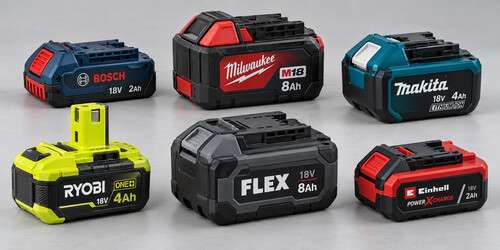
Users with Existing Battery Platforms: Companies and tradespeople who have already invested in a major cordless tool ecosystem (e.g., DeWalt, Milwaukee, Makita, Flex, Bosch, Hilti, Metabo, Fein, Ryobi, Craftsman, Ridgid, Devon, Worx, Einhell, etc) can purchase the paint sprayer (“tool-only”) and use their existing batteries, maximizing the value of their current investment.
-
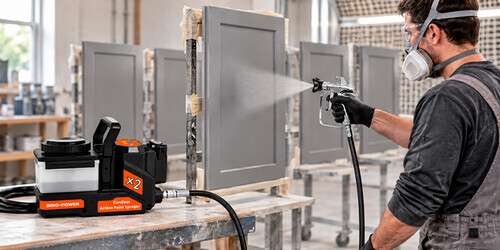
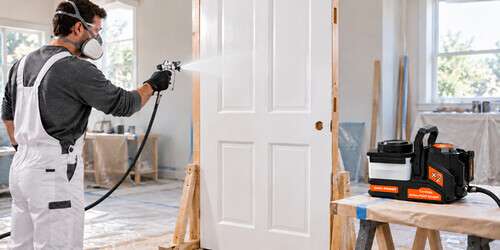
Choosing between cordless and corded airless sprayers depends on your priorities: ultimate convenience and portability vs. maximum power and runtime. Here’s a direct comparison.
Core Comparison
| Feature | Cordless Airless Sprayer | Corded (Electric) Airless Sprayer |
|---|---|---|
| Power Source | Rechargeable lithium-ion battery pack(s). | Plug-in AC power (110V/220V). |
| Portability & Setup | Excellent. No cord to manage. Go anywhere. Instant setup. | Limited. Restricted by cord length and outlet access. Requires extension cords for most jobs. |
| Power & Performance | Lower. Limited by battery output. Lower max PSI and GPM. Best for light to medium materials.
The cordless sprayer normally use low pressure spray tip 100bar atomization pressure |
High. Consistent, unlimited power from the wall. Higher max PSI and GPM. Handles all kinds of thin to thick materials (elastomerics, heavy primers).
The corded sprayer use high pressure spray tip which is 150bar or more pressure for atomizing |
| Run Time / Continuous Use | Limited by battery life (approximately 25–45 minutes of continuous spraying per charge, depending on spray tip size, spraying pressure, battery capacity, coating and operating conditions). Requires battery swaps/charging pauses. | Unlimited. Can run continuously as long as powered, with no performance drop. |
| Best Project Scale | Small to Medium. Furniture, fences, decks, shutters, interior trim, touch-ups, small rooms. | Medium to Large. Whole rooms, house exteriors, large decks, commercial interiors, continuous production work. |
| Professional Use Case | Specialty/Tactical Tool: Final touch-ups, punch lists, cabinet jobs, hard-to-reach areas, sites with no power. | Primary Workhorse: Main sprayer for the majority of standard painting and coating projects. |
| Cost Consideration | Higher upfront cost per tool, but “tool-only” options save money if you own the battery platform. | Lower upfront cost for equivalent power. No ongoing battery investment. |
| Noise Level | Typically quieter than corded or gas, because it spraying with lower pressure | Higher , due to its strong power and high pressure spraying |
Choose a CORDLESS Airless Sprayer if:
-
Your projects are small to medium in scale.
-
Portability and zero setup hassle are your top priorities.
-
You often work in areas without easy access to power outlets (backyards, remote sheds, finished rooms).
-
You need a supplemental tool for quick tasks on large job sites.
-
You are already invested in a major cordless battery platform (e.g., DeWalt, Milwaukee, Makita, Flex, Bosch, Hilti, Metabo, Fein, Ryobi, Craftsman, Ridgid, Devon, Worx, Einhell, Skil,etc ) and can buy the “tool-only” version. our sprayer could attach to these brand battery and battery charger so as to save your money.
Choose a CORDED (Electric) Airless Sprayer if:
-
Your projects are medium to large in scale.
-
Power and the ability to handle thicker materials are critical.
-
You need uninterrupted, continuous runtime for big surfaces.
-
You have reliable access to power or don’t mind using heavy-duty extension cords.
-
You want the most cost-effective and powerful electric option without the limitations of battery life.
So , For most professional painters and serious DIYers, a corded electric airless sprayer is the essential, primary tool due to its reliable power and unlimited runtime.
A cordless airless sprayer is a highly valuable or specialty tool for a pro, saving significant time on small tasks and tricky access situations where running a cord is impractical.
A cordless airless paint sprayer can spray compatible architectural coatings, but paint suitability depends on the specific model, coating viscosity and recommended spray tip. Battery power alone does not determine which paints a sprayer can handle.
- Check the coating: Read the paint manufacturer’s technical data sheet for airless application, tip size and thinning instructions.
- Check the sprayer: The required tip must be within the model’s maximum tip rating, and the coating must be approved for its fluid system.
- Thin only when permitted: Do not use a fixed dilution percentage for every paint. If thinning is allowed, use the specified thinner and stay within the coating manufacturer’s limit.
- Test first: Mix and strain the paint, then test the spray pattern on a sample surface before coating the project.
For solvent-based or flammable coatings, confirm explicit approval in the sprayer manual before use. Send DINO-POWER your paint data sheet and intended application if you need help selecting a suitable model.
As a general guide for this DINO-POWER cordless airless sprayer range, continuous spraying time is approximately 25–45 minutes per charge. Actual runtime varies with spray tip size, spraying pressure, sprayer model, battery voltage and capacity, paint, hose configuration and operating conditions. This range is a guide, not a guaranteed runtime for every setup.
- Compare like-for-like tests: Ask for the battery specification, coating, tip and pressure used when comparing minutes of spraying or liters sprayed per charge.
- Separate spraying time from job time: Continuous trigger-on runtime is different from elapsed time that includes masking, refilling and repositioning.
- Plan battery changes: For longer jobs, confirm the charging time and arrange compatible spare batteries.
- Use an appropriate pressure: Where the model allows adjustment, use the lowest pressure that produces a complete, even spray pattern with the selected coating and tip.
A larger Ah rating generally provides more runtime within the same compatible battery platform, but it does not guarantee a fixed number of minutes or liters. Ask DINO-POWER for model-specific test conditions before planning your workload.
Existing power-tool batteries may be usable with a DINO-POWER cordless airless sprayer, depending on the sprayer version and the exact battery platform. Compatibility must be confirmed for your specific combination; it is not universal across brands.
- Identify both models: Provide the sprayer model, battery brand, battery model number, voltage and Ah rating.
- Confirm the interface: Matching voltage alone does not establish compatibility. The mounting interface, electrical contacts and protection requirements must also match.
- Check the supplied configuration: Ask whether the selected version connects directly or requires a manufacturer-approved adapter, and whether the offer includes batteries and a charger or is tool-only.
- Check charging separately: Use a charger approved for the battery. Compatibility with the sprayer does not mean chargers are interchangeable.
Send DINO-POWER the battery model details or a clear photo of its label before ordering. Do not force a battery into the mount or use an unapproved adapter.
Choose an airless spray tip by matching the coating manufacturer’s recommended orifice size, the surface width and the sprayer’s maximum tip rating. A tip that is too large for the pump can prevent the sprayer from maintaining a proper spray pattern.
- Start with the paint data sheet: Use its recommended airless tip range, then check that your sprayer can support it.
- Match the fan width to the job: A narrower fan suits trim and smaller surfaces; a wider fan can cover larger flat areas more efficiently.
- Understand the tip code: In the common three-digit system, 515 means an approximately 10-inch fan at a 12-inch spraying distance and a 0.015-inch orifice. Check the tip supplier’s specifications.
- Verify compatibility: Confirm the tip, guard, seal and pressure rating are suitable for the gun and sprayer. Use a compatible low-pressure tip where recommended for the model.
Test the pattern before starting. If it is uneven, check the tip and filters before increasing pressure. Follow the manual’s pressure-relief procedure before inspecting or replacing a tip.