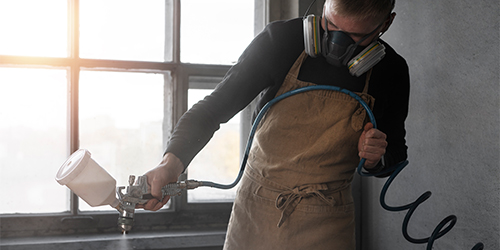
fire-retardant paint or intumescent paint is a specialized protective material applied to surfaces to delay or prevent the spread of fire and protect structural integrity.
How It Works: There are two main mechanisms:
-
Intumescent (Most Common): When exposed to intense heat (typically above 200°C/392°F), the coating swells and expands (like foam) to form a thick, insulating char layer. This layer protects the underlying substrate from the fire’s heat, significantly slowing down temperature rise and delaying structural failure.
-
Cementitious/Ablative: These non-combustible, mineral-based coatings provide a passive heat barrier. They have low thermal conductivity and absorb heat, protecting the substrate through their inherent mass and insulation properties.
Main Types & Applications:
| Type | Primary Use & Substrate | Key Characteristics |
|---|---|---|
| Intumescent Paint/Coatings | Structural Steel (beams, columns), interior applications. | Thin-film, decorative finish. Expands dramatically to insulate. |
| Cementitious Coatings | Structural Steel, Concrete. Industrial & commercial settings. | Thick, spray-applied, durable. Excellent for columns, beams, undersides of decks. |
| Fire-Resistive Mastics/Sealants | Penetration Seals (pipes, cables through walls/floors). | Fills gaps to maintain a fire barrier’s integrity. |
| Thin-Film Wood Coatings | Interior wood, panels, doors. | Clear or pigmented intumescent coatings for architectural woodwork. |
-
Critical Protection: Provides vital time for occupant evacuation and firefighter intervention by protecting load-bearing structures.
-
Code Compliance: Designed and tested to meet specific fire-resistance ratings (e.g., 1-hour, 2-hour ratings per ASTM E119/UL standards).
-
Aesthetics: Modern intumescent paints can provide a smooth, decorative finish while offering protection.
-
Durability: Must withstand the project’s environmental conditions (humidity, corrosion, physical impact).
The selection depends on the:
-
Substrate (steel, wood, concrete).
-
Required Fire-Resistance Rating (determined by building codes).
-
Environment (interior, exterior, corrosive, high humidity).
-
Aesthetic/Finish Requirements.
-
Approved Application Method (often spray-applied for structural steel).
In summary: Fireproofing coatings are engineered, life-safety products. They are not merely “paint” but reactive insulating systems that are rigorously tested and specified based on strict engineering and building code requirements to protect lives and property. Their application is a critical part of modern passive fire protection in construction.


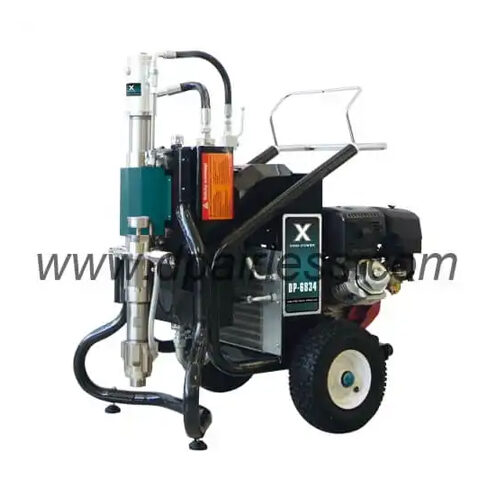
It’s a heavy-duty spray system specifically designed to apply thick, abrasive intumescent fireproofing coatings. These machines handle the material’s high viscosity, heavy solids content, and abrasive nature, which would quickly clog or damage a standard paint sprayer.
Main Types & Their Differences
| Type | Best For | Key Features & Differences |
|---|---|---|
| High-Pressure Airless Sprayer | Most common type. Single-component, water-based or solvent-based intumescent paints. | High Pressure (3000-4500+ PSI) to atomize thick material. Uses a heavy-duty piston pump (often with ceramic components) and a continuous agitator in the hopper or pressure pot to keep solids suspended. |
| Plural-Component Sprayer | Two-part epoxy intumescent coatings. Where a resin and hardener must be mixed precisely at the gun. | Has two separate pumps/material tanks that meter and mix Parts A & B in a set ratio (e.g., 1:1) at the spray gun. Ensures proper chemical cure. More complex but essential for certain high-performance coatings. |
| Heavy-Duty Texture Sprayer | Very thick, mastic-like intumescents or spray-applied fireproofing (SFRM). | Features a large hopper, powerful auger agitator, and a reversible pump to clear blockages. Designed for paste-like materials with extremely high solids content. |
Main Difference: The choice hinges on material formulation (single vs. two-part) and viscosity. Airless handles standard commercial paints; Plural-component is for 2K chemistries; Texture sprayers are for the thickest, mortar-like products.
-
Match the Machine to the Material: Confirm the coating manufacturer’s approved equipment list. This is critical for warranty and performance.
-
Pressure & Flow: Ensure high pressure (min. 3000 PSI) and sufficient flow (GPM) for your project size and desired output.
-
Abrasion Resistance: The pump must have wear-resistant components (ceramic pistons/balls, hardened valves) and an agitator to suspend solids.
-
Hose & Gun: Use a short, large-diameter hose (e.g., 1/2″) with a smooth interior to reduce friction. The gun must have a large fluid passage and a compatible, wear-resistant tip.
-
Project Scale: For large projects, a machine with a bulk hopper or pressure pot is efficient. For smaller jobs, a pail adapter for 5-gallon buckets may suffice.
-
Constant Agitation: Never stop agitating the material in the pot/hopper. Letting solids settle will cause irreversible clogging.
-
No Thinning: Do not thin the coating unless explicitly instructed by the manufacturer, as it can compromise the fire rating.
-
Maintain Wet Film Thickness: Application thickness is critical for performance. Use a wet film gauge and follow the specified number of coats/mils.
-
Immediate & Thorough Cleaning: Clean the machine immediately after use. Cured material inside will ruin the equipment.
-
Personal Protective Equipment (PPE): Mandatory use of a respirator, goggles, gloves, and coveralls. The overspray is a heavy mist of solids.
-
Training: Operators must be trained. Improper application (e.g., wrong thickness, poor adhesion) renders the fire protection system ineffective.
In short: Choose a machine based on the coating’s data sheet. Prioritize high pressure, abrasion resistance, and continuous agitation. Strict adherence to cleaning procedures and application specifications is non-negotiable for both equipment longevity and life-safety performance.