



What is Two-Component Polyurethane Foam?
Two-component polyurethane (PU) foam, often called SPF (Spray Polyurethane Foam), is a reactive insulating material created by mixing two liquid chemicals:
-
Component A (Iso): Methylene diphenyl diisocyanate (MDI).
-
Component B (Resin): A polyol blend containing catalysts, blowing agents, flame retardants, and surfactants.
When mixed, they react almost instantly, expanding 30-60 times in volume to form a rigid or semi-rigid, closed-cell plastic foam.
Spray Polyurethane Foam (SPF) is a high-performance, reactive insulation and sealing material formed by the instantaneous chemical reaction of two liquid components: isocyanate (Component A) and polyol resin (Component B). When combined under high pressure through specialized spray equipment, these components expand dramatically—typically 30 to 60 times their original volume—to form a lightweight, cellular plastic foam that adheres tightly to surfaces. SPF is categorized primarily into two types: open-cell foam, which is softer, more flexible, and offers superior sound absorption, and closed-cell foam, which is denser, rigid, and provides higher insulation value (R-6 to R-7 per inch), structural reinforcement, and moisture resistance.
Which Machine Can Spray It?
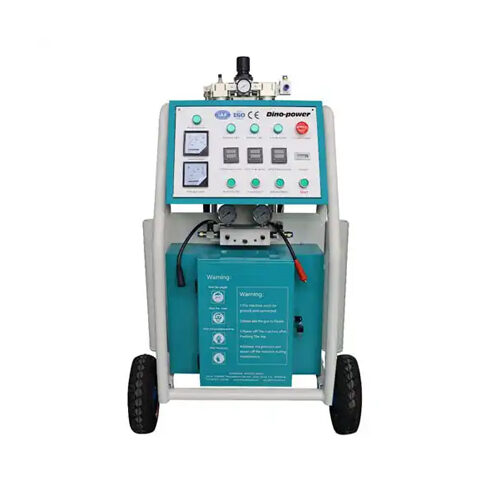
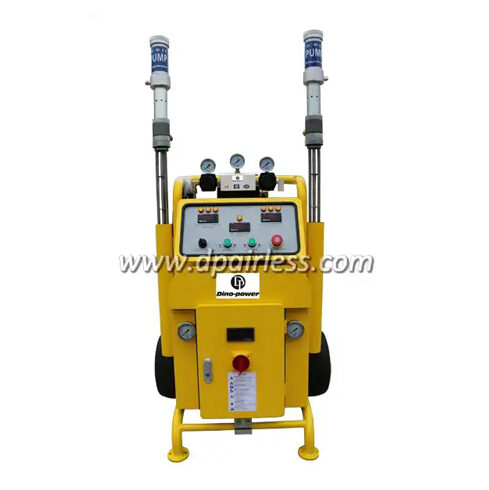
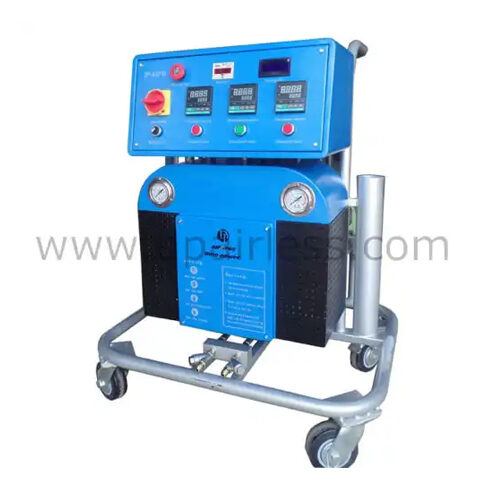
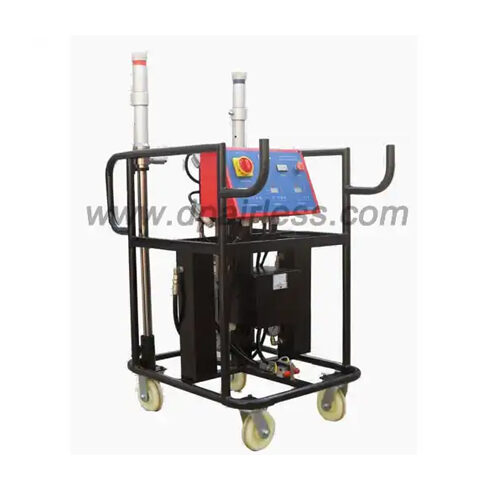
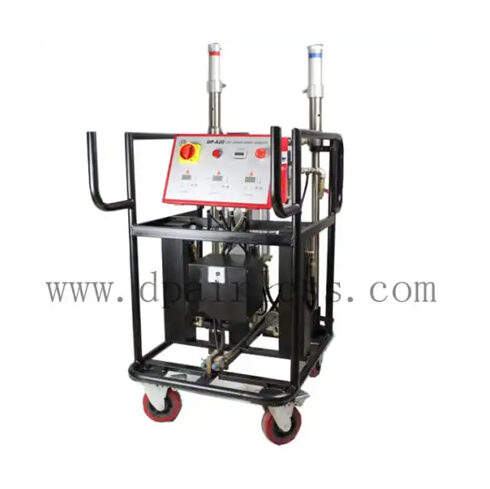
SPF MUST be applied using a specialized Plural-Component Spray Foam Rig such as DP-FA25 FA60 FA65.
A standard single-component pump or airless sprayer is completely unsuitable.
Machine Requirements:
-
Precision Metering Pumps: Two independent, heated piston pumps that meter Components A and B at a strict 1:1 ratio by volume. Accuracy is critical for proper reaction and performance.
-
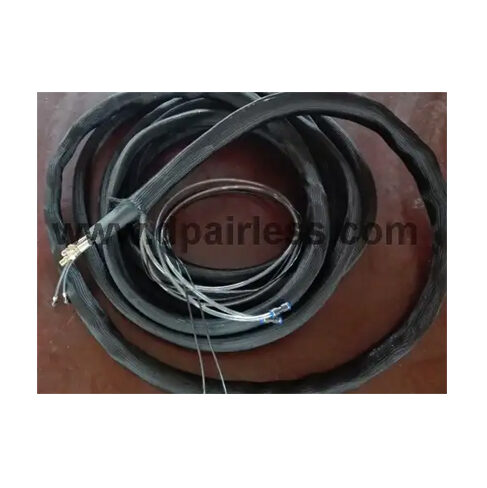
Heated Hoses: Both material hoses are electrically heated to maintain optimal viscosity for mixing and consistent flow.
-
High Pressure & Internal Mixing: Components are pumped at high pressure (typically 1000-2000 PSI) to a spray gun with an internal mixing chamber. Mixing occurs inside the gun just before expulsion.
-
Temperature Control: Precise temperature control of both components is essential for consistent foam density, rise, and cell structure.
-
Air-Purged Gun: The gun is automatically purged with air or solvent between triggers to prevent the reacting foam from curing inside.
Primary Applications of SPU polyurethane foam
-
Building Insulation: #1 Application. Used in walls, roofs (both exposed and unvented attics), and foundations as a superior air barrier and insulator.
-
Commercial/Industrial Roofing: As a seamless, waterproof, and insulating roof membrane or covering.
-
Cold Storage & Refrigeration: Insulating walls and ceilings of walk-in coolers, freezers, and refrigerated trucks.
-
Air & Water Sealing: Sealing gaps, joints, and penetrations to prevent air leakage and moisture intrusion.
-
Flotation & Buoyancy: Used in marine applications (boats, docks) for flotation and insulation.
Advantages & Disadvantages
| Advantages | Disadvantages |
|---|---|
| 1. Superior Insulation: Extremely high R-value per inch (≈ R-6 to R-7), outperforming traditional insulation. | 1. High Cost: Material and professional installation costs are significantly higher than fiberglass or cellulose. |
| 2. Excellent Air Sealing: Expands to fill cavities, creating a continuous, seamless air barrier that eliminates drafts and improves energy efficiency. | 2. Requires Professional Installation: Demands highly trained, certified operators with specialized equipment. DIY kits are for tiny, non-structural tasks only. |
| 3. Moisture Resistance: Closed-cell foam is impermeable to liquid water and acts as a vapor retarder, reducing condensation risk. | 3. Chemical & Safety Hazards During Installation: Component A (isocyanates) are potent respiratory and skin irritants. Installation requires full PPE (supplied-air respirator, suit, gloves, goggles) and proper ventilation. |
| 4. Adds Structural Strength: Closed-cell foam adheres strongly and adds rigidity to building assemblies. | 4. Surface Preparation is Critical: Substrates must be clean, dry, and at the right temperature for proper adhesion. |
| 5. Versatile & Durable: Can be applied to many surfaces (wood, concrete, metal) and has a long service life when properly installed and protected from UV. | 5. Vulnerable to UV Light: Direct, prolonged sunlight degrades the foam. It must be coated or covered for exterior applications. |
In summary: Two-component polyurethane foam is a high-performance insulation and air-sealing material that provides unmatched thermal efficiency and building envelope tightness. Its application is a specialized chemical process requiring significant investment in proper equipment, training, and safety protocols. It is a premier choice for energy-conscious construction and retrofit projects where long-term performance justifies the upfront cost.