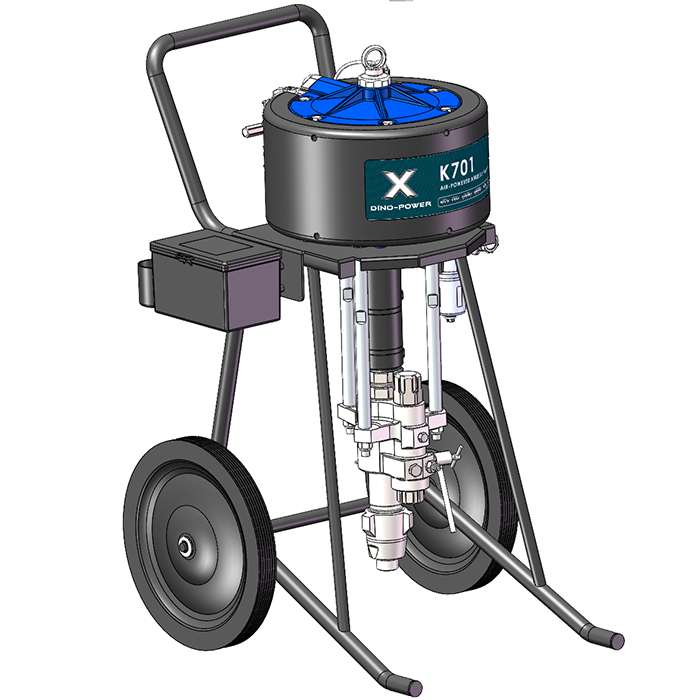
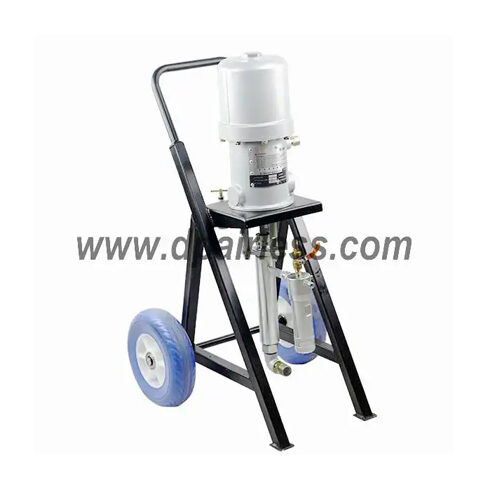
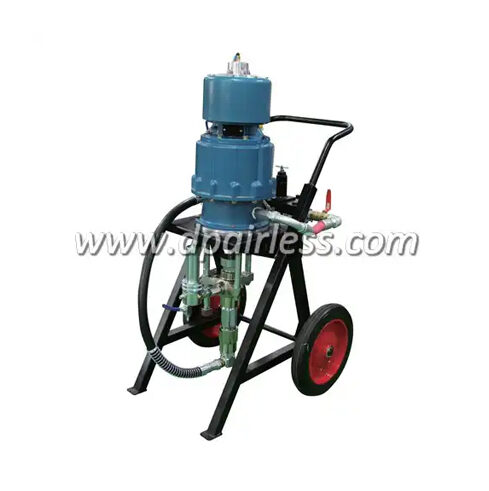
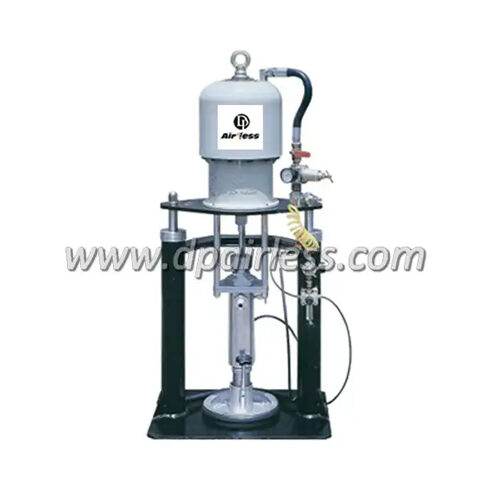
The Pressure Ratio (e.g., 30:1) is a fixed mechanical property of the pump’s design. It is the ratio of the area of the large air piston to the area of the smaller fluid piston/plunger.
Correct Technical Definition & Formula:
Why This Ratio Creates Pressure Amplification:
According to Pascal’s Principle and the formula Pressure = Force / Area:
-
Force Input: Compressed air exerts a Force (F_air) on the large air piston. This force is: F_air = Air Pressure (PSI) × Area of Air Piston.
-
Force Transfer: This same force (F_air) is transmitted through the piston rod to the much smaller fluid piston.
-
Pressure Output: The output fluid pressure is created by applying this force over the very small area of the fluid piston: Fluid Pressure (PSI) = F_air / Area of Fluid Piston.