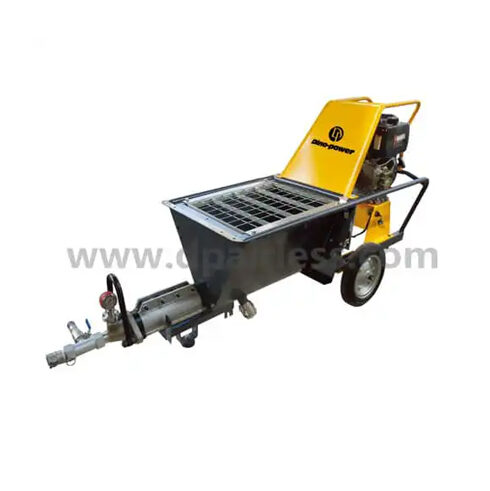
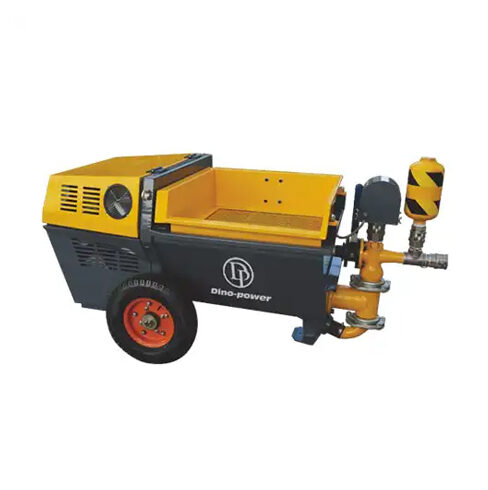
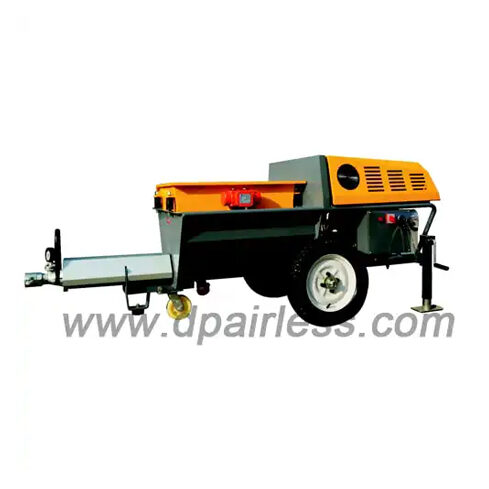

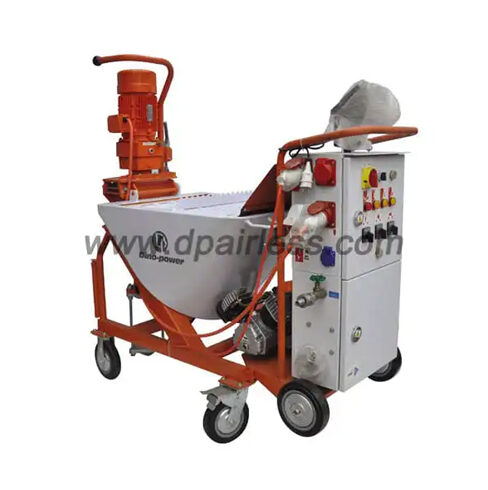
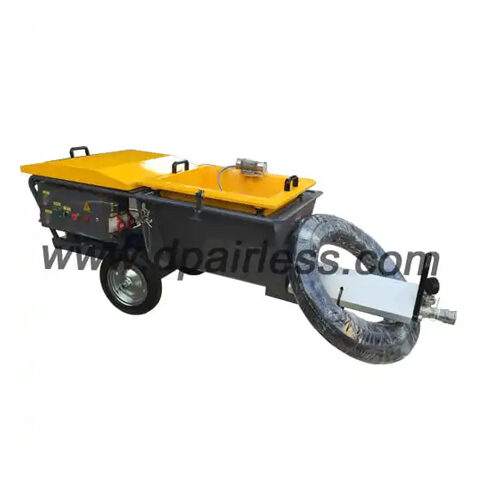
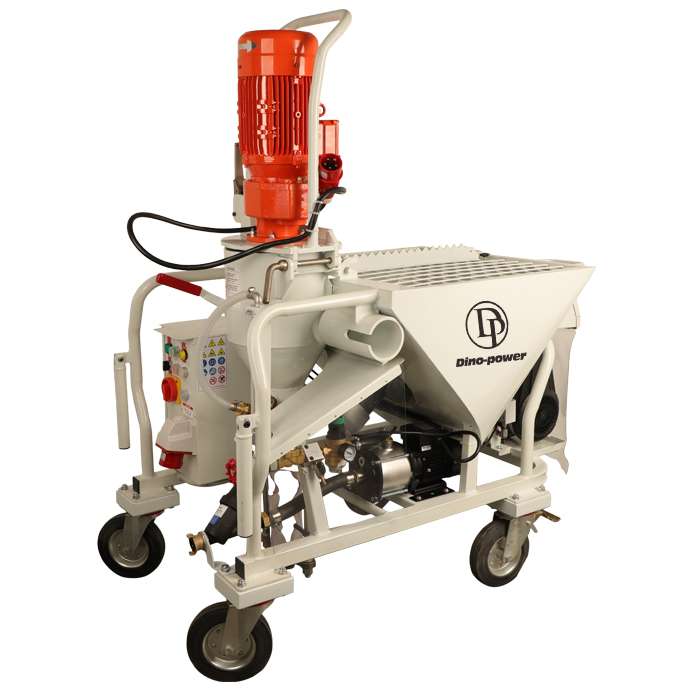
Shotcrete is a high-performance concrete or mortar that is pneumatically projected (shot) at high velocity onto a surface. It is defined by its application method, not its composition. The force of impact compacts the material, forming a dense, strong, and well-adhered layer on vertical, overhead, or irregular surfaces where traditional formwork is impractical or impossible.
Two Main Application Processes
The key distinction in shotcrete is how the materials are combined:
| Process | How It Works | Key Characteristics |
|---|---|---|
| Dry-Mix (Gunite) | Dry pre-blended mix (cement + damp aggregate) is propelled through the hose. Water is added at the nozzle by the operator, who controls the final water-cement ratio. | • Faster set time. • Higher rebound (more material falls away). • Ideal for repair work, rock stabilization, and thinner sections where precise water control is needed on-site. |
| Wet-Mix | Fully mixed concrete (with all water and admixtures) is pumped to the nozzle, where compressed air is introduced to propel and atomize it onto the surface. | • Higher production volume & less rebound. • More consistent mix quality. • Ideal for large-scale projects, thicker linings, and structural elements like pools, domes, and tunnels. |
Key Properties & Advantages
-
Excellent Adhesion & Consolidation: Impact force creates a dense, void-free layer with strong bond to substrate (rock, steel, existing concrete).
-
No Formwork Required: Dramatically reduces cost and time for complex shapes (domes, shells, curved walls) or inaccessible areas.
-
Rapid Construction: Can be applied in thick layers quickly, speeding up timelines for tunneling, slope stabilization, and repairs.
-
Versatile & Durable: Can be reinforced with fibers (steel or synthetic) or welded wire mesh for structural strength and crack resistance.
Primary Applications
-
Underground & Tunneling: Primary lining for tunnels, mine shafts, and underground caverns (the dominant global use).
-
Slope & Rock Stabilization: Protecting embankments, road cuts, and cliffs from erosion and rockfalls (soil nailing, rockfall netting).
-
Swimming Pools & Domes: Constructing free-form shells and complex curved structures.
-
Repair & Rehabilitation: Restoring deteriorated bridges, dams, parking structures, and historic buildings.
-
Architectural & Retaining Walls: Creating sculptural walls, facades, and landscape features.
Critical Factor: The Nozzleman
The success of shotcrete heavily relies on the skill of the nozzleman. This operator controls:
-
Nozzle distance and angle to minimize rebound and ensure proper compaction.
-
Application sequence to avoid sagging or voids.
-
In dry-mix, the critical water addition for optimal strength and workability.
Grouting is the process of injecting a fluid material into cavities, cracks, voids, or the space between structures and the surrounding soil/rock to achieve one or more specific engineering objectives. The injected material (grout) then hardens, solidifies, or gels to fulfill its designed function.
Primary Purposes of Grouting:
-
Filling & Sealing: To fill voids (e.g., behind tunnel linings, in concrete defects), seal cracks (in concrete structures, dams), and create waterproof barriers.
-
Soil Stabilization & Permeation: To bind loose soil particles together, reduce groundwater flow, and increase soil strength and stability for excavation or foundation support.
-
Structural Support & Lifting: To provide uniform bearing support under foundations (slab jacking) or to precisely lift and level settled concrete slabs (mudjacking/concrete lifting).
-
Anchoring & Bonding: To embed bolts, dowels, or tendons into rock or concrete, and to bond new concrete to old.
Types of Grout & Their Applications:
| Grout Type | Key Ingredients | Typical Applications |
|---|---|---|
| Cementitious Grout | Cement, water, sand, admixtures | Filling large voids, underpinning foundations, mass fill (e.g., behind tunnel segments). |
| Chemical Grout / Resin | Polyurethane, acrylic, epoxy, silicate gels | Soil permeation, fine crack sealing, water stopping, anchoring. Expands or hardens quickly. |
| Bentonite Grout | Bentonite clay (swells when wet) | Slurry walls, water cutoff barriers, backfill for wells and geothermal boreholes. |
Machines Used for Grouting (Grout Pumps)
The machine choice is critical and depends on grout type, pressure requirements, and project scale.
1. Piston Pumps (Diaphragm & Plunger)
-
How it Works: Uses a reciprocating piston to displace grout. Can be single-piston (pulsating flow) or twin-piston (smoother flow).
-
Best For: Cementitious and bentonite grouts with suspended solids. Handles higher viscosities and moderate to high pressures.
-
Applications: Slabjacking, pressure grouting of foundations, tunnel backfill, curtain grouting.
2. Progressive Cavity Pumps (Screw Pumps/Mono Pumps)
-
How it Works: A helical rotor turns within a stator, creating moving cavities that push the grout smoothly with low shear and pulsation-free flow.
-
Best For: High-viscosity, abrasive grouts and sensitive mixtures where maintaining particle suspension is crucial (e.g., delicate repair mortars, thick cement grouts).
-
Applications: Precision grouting of pre-placed aggregates, injecting thick mortars, industrial flooring.
3. Gear Pumps
-
How it Works: Two meshing gears trap and transfer fluid. Provides a steady, pulseless flow.
-
Best For: Low to medium viscosity chemical grouts and resins (epoxy, polyurethane) without abrasives. Not suitable for cementitious grouts with solids.
-
Applications: Crack injection, soil stabilization with chemical grouts, epoxy injection for concrete repair.
4. Peristaltic Pumps (Hose Pumps)
-
How it Works: Rollers compress a flexible tube, pushing the grout through. The grout only contacts the tube, making cleanup easy.
-
Best For: Aggressive chemical grouts, slurries, and sensitive mixes where contamination must be avoided. Excellent for low to medium pressure.
-
Applications: Laboratory work, precise injection of acids/corrosives, grouting with expensive resins.
5. Pneumatic (Air-Powered) Pumps
-
How it Works: Uses compressed air to displace grout from a pressurized pot or chamber.
-
Best For: Low-pressure, high-volume applications and foaming grouts (like polyurethane foam for lifting).
-
Applications: Mudjacking (concrete slab lifting), filling large cavities, non-critical backfilling.
-
Grout Material: This is the first filter. Cement/sand mixes need a piston or progressive cavity pump. Pure chemical resins can use a gear or peristaltic pump.
-
Pressure & Flow (GPM/LPM): Determine required injection pressure (to overcome soil/void resistance) and volume output.
-
Particle Size & Abrasiveness: Pumps must handle the largest particle size in the grout without clogging or excessive wear.
-
Mixing System: Many machines integrate a continuous mixer to combine dry and wet components on-demand, which is essential for consistent quality.


EPS stands for Expanded Polystyrene. In the context of spray-applied materials, it specifically refers to Spray Polyurethane Foam (SPF) Insulation, but EPS itself is a rigid, closed-cell plastic foam primarily used in insulation boards, packaging, and disposable food containers.
However, the term “spraying EPS” is commonly and incorrectly used in some construction fields to describe the process of spraying a cementitious coating containing EPS beads. This creates a lightweight insulating and decorative plaster (e.g., for exterior wall systems).
For the purpose of this guide on spray equipment, we will address the two main materials associated with “spraying EPS”:
-
Spray Polyurethane Foam (SPF) Insulation – The true sprayed foam insulation.
-
EPS-Cementitious Render/Plaster – A slurry containing EPS beads for insulation and texture.
1. Spray Polyurethane Foam (SPF) – The True “Spray Foam”
This is a two-component, reactive liquid that expands 30-60 times its volume upon application to form a solid, seamless foam insulation.
-
Components:
-
Side A (Iso): Methylene diphenyl diisocyanate (MDI)
-
Side B (Resin): A polyol blend, blowing agents, catalysts, and flame retardants.
-
-
Key Properties: Excellent insulation (high R-value), air barrier, moisture resistance, and adhesion.
-
Types: Open-cell (softer, sound-absorbing) and closed-cell (denser, rigid, structural, higher R-value).
Which Pump Can Spray SPF Foam?
SPF MUST be applied with a specialized Plural-Component Spray Foam Rig. It is not applied with a standard single-component pump.
Machine Requirements:
-
Precise Proportioning: Two high-precision, heated piston pumps or gear pumps to meter the two liquid components (Iso and Resin) at a strict 1:1 ratio.
-
Heated Hoses: Both component hoses are electrically heated to maintain optimal viscosity for mixing and reaction.
-
High Pressure: Components are pumped at high pressure (typically 1000-2000 psi) to a mixing chamber.
-
Spray Gun with Internal Mixing: The components meet and are mechanically mixed inside the gun’s mixing chamber before being sprayed. Guns are air-purged between triggers to prevent curing inside.
-
Temperature Control: Critical for consistent foam rise, cell structure, and yield.
2. EPS-Cementitious Render/Plaster (Lightweight Insulating Plaster)
This is a single-component material where pre-expanded EPS beads are mixed with a cement-based or polymer-modified binder to create a lightweight, insulating slurry for spray application.
Which Pump Can Spray EPS-Cementitious Material?
This material is sprayed using heavy-duty, continuous mixing plastering and rendering machines.
Recommended Machine Types & Features:
-
Rotary Screw Pump (Progressive Cavity) Rendering Machine:
-
Best Choice. The gentle, non-pulsating pumping action of a screw pump is ideal for keeping the lightweight EPS beads in suspension and preventing segregation or crushing. It ensures a consistent, homogeneous mix.
-
-
Piston Pump Plastering Machine (with Agitator):
-
Alternative for thicker mixes. Must be equipped with a powerful continuous agitator in the hopper or material pot to prevent the EPS beads from floating to the top. The pulsating flow may require more skill from the nozzleman.
-
-
Peristaltic Pump (for smaller-scale or precision work):
-
Can be used for low-volume applications or specialty finishes, as the squeezing action is also gentle on the beads.
-
Critical Machine Feature for EPS Slurries:
-
Continuous Mixing: The machine must have an on-board mixing system that continuously combines the dry pre-mix (containing EPS beads) with water right before pumping. This ensures the beads are evenly distributed and the slurry does not separate.
Only if its feed and mixing arrangement is designed for both. DINO-POWER M6 is a mixing-pump model for suitable dry premixes, while the DP-N6 range includes configurations with different mixer and compressor arrangements. Never load wet mortar into a dry-material feed system without approval. Identify the material form, water requirement, setting time and aggregate size before choosing equipment. Our team can match the material data sheet to the correct machine configuration.
The permitted particle size is model- and pump-specific. Do not infer it from the spray-nozzle diameter: DINO-POWER DP-N5 lists 10, 12 and 15 mm nozzles, but those dimensions are not an aggregate-size rating. Oversized grains, lumps and unsuitable fibers can block or damage the pump and hose. Provide the maximum particle size and grading from the mortar supplier so DINO-POWER can confirm a compatible pump, hose and nozzle combination before use.
Use the exact model specification and review the whole route. DINO-POWER DP-N5 lists up to 50 m delivery distance and 30 m delivery height, while M6 lists 25 m distance with a 25 mm hose and 25 m height. Maximum values cannot automatically be combined. Hose diameter, bends, mortar consistency and wear affect delivery. A site drawing and material data sheet help us determine a practical arrangement and any need for a different machine.
Stop pumping and follow the model’s pressure-relief and blockage-clearing procedure. Never loosen a coupling while the hose may be pressurized or try to clear it by uncontrolled pressure increases. DINO-POWER DP-N5 lists 30 bar working pressure, which can still store significant energy in a blocked line. Set mortar, oversized particles and inconsistent water dosing are possible causes. Confirm that pressure is relieved before trained personnel inspect the line, then correct the cause before restarting.
Reduced output, difficulty maintaining pressure and leakage may indicate wear, but also check the mortar consistency, supply and hose restrictions first. DINO-POWER’s screw-pump mortar range uses model-specific rotor/stator combinations; select replacements by the exact machine and pump designation. Abrasive materials and dry running accelerate wear, so follow lubrication and priming instructions. Our quality-control team can help identify service parts from the model, operating history and fault details rather than relying on appearance alone.