How to Select the Correct Airless Paint Sprayer
Choose an airless paint sprayer by matching the coating, spray tip and workload—not by maximum pressure alone. The right machine must deliver enough material at the pressure needed for a consistent spray pattern, while remaining practical to move, clean and maintain.
This guide helps homeowners, maintenance teams and painting contractors narrow down their options for walls, ceilings, fences, cabinets and larger coating projects.
Start with the coating you actually plan to spray
Before comparing machines, obtain the coating manufacturer’s technical data sheet (TDS). Check whether airless application is permitted, the recommended tip orifice, application pressure, approved thinner and maximum thinning allowance. For two-component coatings, also check mixing ratio, induction time and pot life.
“Water-based,” “primer” and “epoxy” are broad descriptions, not complete equipment specifications. Two products in the same category may need different tips, wetted materials or cleaning procedures. Do not assume a small decorating sprayer can apply roof membranes, filled coatings or plaster simply because its pressure rating looks high.
Match your project and frequency of use
| Your application | What matters most | What to confirm before buying |
|---|---|---|
| Occasional home renovation, fences and room repainting | Portability, simple setup and manageable cleanup | Compatibility with the selected paint and its required tip |
| Regular residential or property-maintenance work | Sustained output, serviceable pump and convenient filters | Recommended workload, spare-part availability and hose configuration |
| Cabinets, doors and trim | Controlled delivery and finish quality | Suitable fine-finish tip, compatible coating and successful test panels |
| Large exteriors or heavy protective coatings | Capacity under load and a coating-specific fluid path | Tip capacity, hose diameter, power supply and application requirements |
A sprayer suitable for occasional DIY work is not automatically suitable for continuous commercial production. Consider how often you spray, how much material you use per job and how expensive downtime would be. Do not use an advertised maximum output as a guarantee of daily production.
Understand flow rate, maximum tip size and pressure
Flow rate: how much material the system can supply
Flow rate is usually expressed in litres per minute (L/min) or US gallons per minute (GPM). Check the stated test conditions: maximum free-flow output is different from delivery through a tip while maintaining spraying pressure. A larger flow rating can support higher-demand applications, but only when the rest of the system is correctly matched.
Maximum tip size: a practical compatibility check
The coating’s recommended orifice must fall within the sprayer’s supported tip range. Allow for the actual material, hose arrangement and workload rather than selecting a machine solely at its limit. A worn tip can demand more material and reduce working pressure.
On many conventional three-digit airless tips, the final two digits identify the orifice in thousandths of an inch. A 515 and a 517 therefore have different flow demands despite similar nominal fan widths. See our airless spray tip size selection guide for the relationship between fan width, material and orifice size.
Pressure: distinguish rated maximum from actual spraying pressure
Two machines with similar maximum pressure can perform differently with the same paint. What matters is whether the complete system maintains adequate pressure at the gun during spraying. More pressure is not always better: use the lowest setting that produces the required atomisation and finish, within the coating and equipment instructions.
Choose a power source and pump system for the jobsite
- Electric airless sprayers: consider available voltage, circuit capacity, extension-cable requirements and access to power.
- Cordless sprayers: assess battery capacity, charging arrangements and realistic work cycles, including setup and cleaning. Battery power alone does not establish coating compatibility.
- Gas-powered machines: useful where mains power is unavailable, subject to the model’s application limits. Keep combustion engines outdoors and follow exhaust and fire-safety requirements.
- Hydraulic or pneumatic systems: may suit demanding coating work, but selection still depends on the individual pump, pressure, flow, seals and material requirements. Pneumatic systems also need an adequate compressed-air supply.
Browse the DINO-POWER airless paint sprayer range to compare the available equipment types.
Examples from the DINO-POWER range
For residential, property-maintenance and small commercial applications, the SP480 professional electric airless paint sprayer is a model to evaluate against your coating and workload requirements.
For heavier-duty applications, review the DP-9600E electric hydraulic airless sprayer. A heavy-duty designation does not mean every epoxy, fireproofing material or waterproofing product is suitable. Confirm the exact formulation, required output and equipment configuration before ordering.
Do not overlook the hose, gun and maintenance
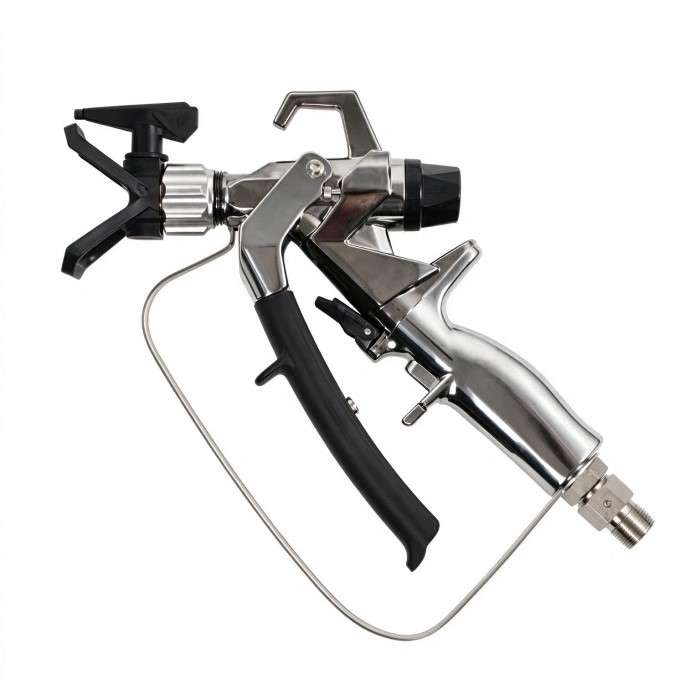
Confirm the supplied hose length and internal diameter, gun pressure rating, tip and guard compatibility, filtration and included accessories. Longer or narrower hoses can increase pressure loss, especially with more viscous materials. Use only approved, pressure-rated components; the system must not exceed its lowest-rated component.
Check how to clean the pump, access filters and obtain replacement wear parts. Read how to clean an airless sprayer before choosing equipment, especially if you change colours or coatings frequently.
Common questions before choosing an airless sprayer
Which airless paint sprayer is best for a beginner?
Look for a machine that supports your paint and tip, has clear setup instructions, and is easy to move and clean. The smallest or cheapest model is not necessarily the best match. For a very small job, also compare preparation and cleanup time with brushing or rolling.
Can one airless sprayer paint walls and cabinets?
Sometimes, with compatible coatings and an appropriate tip for each task. Wall coverage and cabinet finishing require different control and preparation. Test the complete coating and tip combination on a sample before spraying the finished work.
Will a larger tip finish the job faster?
Only if the pump can support it, the coating allows it and the application rate is appropriate. An oversized tip can overload the sprayer, reduce atomisation or apply excessive film thickness.
Send these details for a more useful recommendation
Tell us the coating brand and product name, attach its TDS, describe the surface and project size, estimate daily material use, and specify your voltage, hose reach and number of guns. Contact DINO-POWER for equipment selection assistance with those details so the recommendation addresses the actual application.