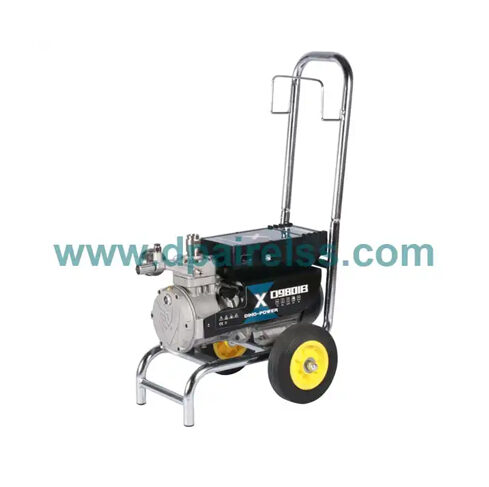
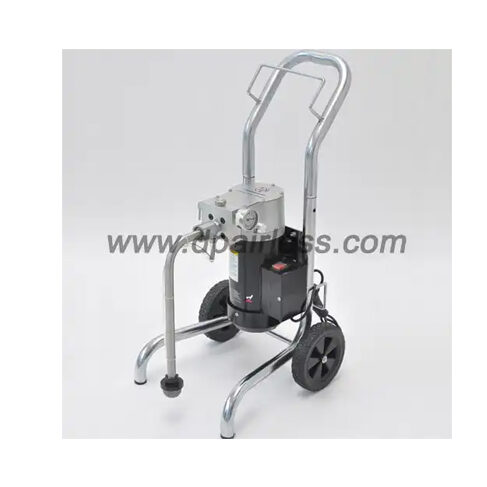
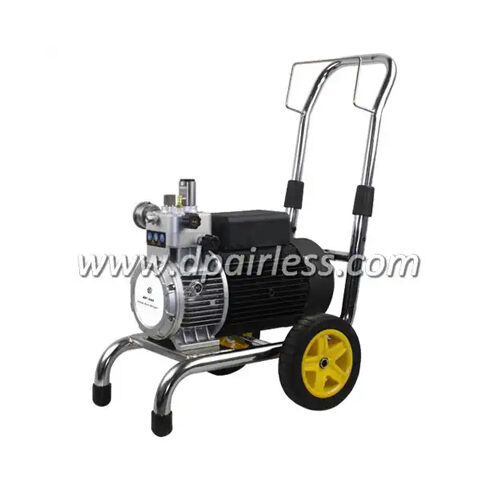
A diaphragm pump sprayer is a durable, low-maintenance option, ideal for abrasive materials. Here’s how to pick the right one.
1. Key Feature: The Diaphragm Pump
-
Pro: Handles abrasive materials (e.g., textured paints, zinc-rich primers) much better than piston pumps, with less wear.
-
Pro: Often easier to maintain; the diaphragm is the main wear part.
-
Con: Typically provides lower pressure and flow than an equivalent piston pump.
2. Material & Project Match
Choose this type if you frequently spray:
-
Abrasive Coatings: Textured paints, masonry coatings, roof paints, primers with sand.
-
Heavy-Body Materials: Elastomerics, block fillers, certain sealants.
-
Standard Paints: They handle these perfectly well, but a piston pump may be faster.
3. Performance Specs: GPM & PSI
-
Flow Rate (GPM): For heavy materials, a moderate GPM (0.3-0.6) is common. Ensure it meets your project speed needs.
-
Pressure (PSI): Diaphragm pumps often max around 2500-3200 PSI. Verify it’s sufficient to atomize your thickest materials.
4. Duty Cycle & Build
-
Professional Use: Look for a heavy-duty, oil-bath diaphragm pump and a robust motor designed for all-day operation.
-
Occasional Use: A lighter-duty, grease-lubricated model may be cost-effective.
Quick Selection Guide:
-
For abrasive/heavy materials and easier maintenance: A Diaphragm Pump is the top choice.
-
For maximum pressure, highest speed, and standard paints: A Piston Pump is typically more efficient.
The diaphragm pump airless sprayer stands out for its exceptional durability and specialized performance. Its core advantage lies in its unique pumping mechanism.
Key Advantages:
-
Superior Durability with Abrasive Materials: The pump’s diaphragm acts as a flexible, replaceable barrier between the paint and the pump’s inner mechanics. This makes it highly resistant to wear from abrasive particles, significantly extending the pump’s life compared to piston pumps.
-
Lower Maintenance & Easier Repair: Maintenance is often simpler. The main wear part is the diaphragm itself, which is typically easier and less expensive to replace than a piston and cylinder set.
-
Reliable & Self-Priming: These pumps are excellent at drawing material from the container and handle thicker, heavier materials reliably without cavitation.
-
Gentler on Mechanics: The design is less prone to scoring or damage from grit, making it a robust choice for harsh job site conditions.
Materials Where It Shines (Special Advantage):
A diaphragm pump is specifically and highly advantageous when spraying:
-
Abrasive-Containing Coatings:
-
Textured Paints (e.g., popcorn ceilings, stucco-like finishes)
-
Masonry Paints & Coatings
-
Zinc-Rich Primers and other corrosion-resistant primers
-
Roof Coatings filled with granules or sand
-
Floor Paints designed for heavy traffic
-
-
Heavy, Viscous Materials:
-
Elastomeric Wall & Roof Coatings
-
Block Fillers and heavy-bodied primers
-
Sealants and some thick mastics
-
A diaphragm pump airless sprayer is ideal for large, rough, or textured surfaces where durability is key.
Common Surfaces:
-
Masonry & Concrete (walls, foundations, floors)
-
Exterior Siding & Stucco
-
Roofs
-
Metal Structures (fences, industrial equipment)
-
Decks & Fences
Best Suited Coatings:
-
Abrasive/Textured Paints (masonry paint, stucco finishes)
-
Heavy-Body Primers (block fillers, galvanized metal primers)
-
Elastomeric & Roof Coatings
-
Protective Sealants


Piston Pump
-
Pros: Higher pressure & flow rate, faster application, better for smooth finishes, ideal for large-area projects with standard paints.
-
Cons: Wears faster with abrasive materials, higher maintenance on internal parts.
Diaphragm Pump
-
Pros: Handles abrasive materials well, longer life with gritty coatings, easier/cheaper maintenance, reliable with thick paints.
-
Cons: Lower max pressure & flow, slower on big smooth-surface jobs.
Common causes include an empty paint container, an air leak at the suction connection, a blocked strainer, a stuck inlet valve or the wrong prime/spray setting. Follow the model manual and start in the priming position with a compatible cleaning liquid if required. DINO-POWER diaphragm models such as DP-6860E use inlet and outlet valves as service components; dried coating on these valves can affect priming. Relieve pressure and disconnect power before inspection. Do not keep running a pump that will not take in fluid; contact service if basic checks do not restore priming.
Use only the drive-system oil and filling procedure specified for your exact diaphragm sprayer. Paint-side cleaning liquid and drive oil serve different purposes and must not be mixed. Oil grade, quantity and service interval should not be copied from another model or from a hydraulic piston sprayer. For example, DP-6860E is an electric diaphragm unit with a listed 2.2 kW induction motor, while the drive and reservoir arrangement can differ across the range. Give DINO-POWER the model and serial number to confirm the correct oil specification before topping up or changing it.
Check the fluid supply, suction connections, filters, tip condition and pressure setting first. Air entering the suction line or contamination on a valve can interrupt delivery. Use a tip within the model rating: DINO-POWER lists DP-6860E at up to 0.025 inch with a flow rate of 4.5 L/min. A larger or worn tip can demand more flow than the unit can maintain. Use the lowest pressure that produces a complete fan with the chosen coating. If pulsing continues after these checks, ask service to assess the diaphragm, valves and pressure regulator.
Relieve pressure and follow the sprayer manual and coating supplier instructions. Drain the old coating and flush the suction path, pump, hose and gun with a compatible cleaning liquid; clean the filters and tip separately as directed. Water-based and solvent-based products may require different cleaners and an appropriate transition procedure. The diaphragm separates the coating from the drive system, but it does not make every solvent compatible with the fluid-path seals. Provide the coating and cleaner data sheets to DINO-POWER if you are unsure about compatibility. Never introduce cleaning liquid into the drive-oil reservoir.
DINO-POWER identifies the diaphragm, inlet valve, outlet valve, pressure regulator and prime/spray valve as wear-related service components on models such as DP-6860E. Difficulty priming, pressure loss, leakage or irregular delivery can indicate a problem, but the symptom alone does not identify the failed part. First exclude blocked filters, suction leaks and an unsuitable tip. Send the model, serial number and fault details so the correct parts can be supplied. Relieve pressure and disconnect power before maintenance, and follow the model-specific repair instructions.